Say: We believe in Allah (GOD) and in what has been sent down to us, and what was sent down to Abraham, Ishmael, Isaac, Jacob and the twelve sons of Jacob, and what was given to Moses, Jesus and the Prophets from their Lord. We make no distinction between them and to Him (Allah) we have submitted (in Islam).” [Qur’an, 3:84]
General Information about Islam
The word Islam is derived from the Arabic root s-l-m, which conveys meanings of peace, safety, and submission. In religious terms, Islam means attaining peace through willingly surrendering one’s will to God, placing God’s pleasure above one’s own. The message of Islam was revealed to the Prophet Muhammad (peace and blessings be upon him) over 1,400 years ago through the Angel Gabriel (peace be upon him) and has been preserved in the Qur’an. The Qur’an declares a divine guarantee of its preservation and affirms that it confirms and completes the essential teachings of earlier revelations.
The central message of Islam is the absolute oneness of God: that the Creator of the universe is One, that He alone is worthy of worship, and that Muhammad (peace and blessings be upon him) is His servant and messenger. One who accepts this belief is called a Muslim. In addition, Muslims believe in God’s angels, His previously revealed scriptures, all His prophets, from Adam through Jesus (peace be upon them all), the Day of Judgment, and God’s divine decree.
Islam prescribes five foundational acts of worship, known as the Five Pillars of Islam:
(1) Bearing witness that there is no deity worthy of worship except God, and that Muhammad is the Messenger of God;
(2) Performing the prescribed daily prayers;
(3) Giving zakat (obligatory charity);
(4) Fasting during the month of Ramadan; and
(5) Performing the pilgrimage to Mecca for those who are financially and physically able.
Islam teaches that every human being is born in a state of natural purity. The Qur’an explains that God has granted human beings free will, the choice between right and wrong, and calls them to seek His pleasure through faith, prayer, and charity. At its heart, Islam calls for the worship of God and the cultivation of compassion, justice, and kindness toward all of creation. This includes honoring parents, caring for orphans and the needy, and upholding the dignity and rights of women—principles established in Islamic teachings more than 1,400 years ago.
Islam does not promote withdrawal from the world or the rejection of lawful pleasures. Rather, it encourages a balanced and wholesome life characterized by kindness, honesty, chastity, mercy, patience, courage, and good manners. Islam offers a comprehensive moral and social framework for both individuals and communities. Its teachings are derived from the Qur’an and the Sunnah (the teachings and practices of the Prophet Muhammad, peace and blessings be upon him), providing enduring principles that transcend time and place. While Islamic law may appear rigid at first glance, it is in fact a flexible and adaptable system grounded in universal values.
Islam teaches that the path to spiritual growth is open to all. Anyone who sincerely seeks the One Creator can draw closer to God through heartfelt worship and devotion. This inclusive and hopeful message aims to inspire faith, purpose, and moral strength in humanity.
Today, there are nearly two billion Muslims worldwide, forming the majority population in over fifty countries. Islam continues to be one of the fastest-growing faiths in the world, and its message of monotheism, justice, and compassion continues to reach people across every corner of the globe.
What is Islam?
Islam is not a new religion; rather, it represents the same divine truth that God revealed to all His prophets throughout history. It is both a faith and a comprehensive way of life, guiding belief, worship, ethics, and social conduct. Islam teaches peace, mercy, and forgiveness, and it should not be associated with acts of violence or injustice committed against innocent people.
Who are Muslims and what do they believe?
There are an estimated two billion Muslims worldwide, and fewer than 20 percent live in the Arabic-speaking world. The country with the largest Muslim population is Indonesia. Muslims believe in one God, unique, incomparable, and without partners, and they believe in the Day of Judgment, when each individual will be held accountable for their actions.
Muslims also believe in a continuous chain of prophets sent by God, beginning with Adam and including Noah, Abraham, Ishmael, Isaac, Jacob, Joseph, Job, Moses, David, Solomon, and Jesus (peace be upon them all). This same divine message was reaffirmed and brought to completion through the final prophet, Muhammad (peace be upon him).
A person becomes a Muslim by sincerely declaring: “There is no deity worthy of worship except God, and Muhammad is the Messenger of God.” By making this declaration, one affirms faith in God and in all of His messengers, without distinction.
What is the Qur'an?
The Qur’an is the record of the exact words revealed by God to the Prophet Muhammad (peace and blessings be upon him) through the Angel Gabriel. The Prophet memorized the revelations as they were received and conveyed them to his companions, who recorded and memorized them as well. During the Prophet’s lifetime, the text was carefully reviewed and cross-checked to ensure its accuracy. Comprising 114 chapters, the Qur’an has been preserved in its original form and has remained unchanged throughout the centuries.
What are the "Five Pillars" of Islam?
1) The Declaration of Faith (or Tawhid). This consists of the two sentence declaration described above.
2) Prayer (or Salah) - Muslims perform five obligatory prayers each day. Islamic prayers are a direct link between the worshiper and God. Islam has no hierarchical authority or priesthood. A learned Muslim chosen by each congregation leads the prayers.
3) Charity (or Zakah) - One of the most important principles of Islam is that all things belong to God, and that wealth is held in trust by human beings. Zakah, or charitable giving, "purifies" wealth by setting aside a portion for those in need. This payment is usually two and a half percent of one's wealth.
4) Fasting (or Saum) - Every year in the Islamic lunar month of Ramadan, Muslims fast from first light until sunset. The fast is another method of self-purification.
5) Pilgrimage (or Hajj) - A pilgrimage to Mecca, or Hajj, is an obligation for those who are physically and financially able.
What about the American Muslim community?
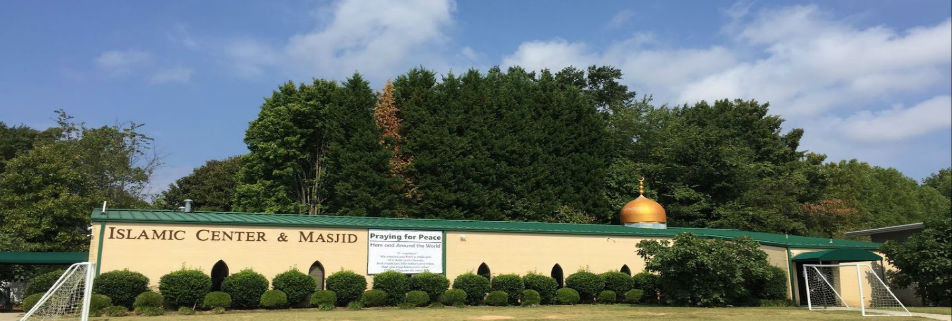
There are an estimated seven million Muslims in the United States, representing a rich diversity of ethnic backgrounds and national origins. The community is supported by nearly 2,000 mosques, Islamic schools, and community centers across the country. Muslims in the U.S. participate actively in all walks of life, contributing to the social, cultural, and professional fabric of the nation.
What about Muslim women?
Under Islamic law, women have always had the right to own and manage property, pursue an education, and participate fully in social and community life. Islam teaches that men and women are equal in dignity, worth, and responsibility before God, and both are entitled to respect. The principles of modesty in Islam apply to both men and women; for instance, men are also required to dress modestly and are prohibited from wearing gold or silk.
Historically, these rights were revolutionary at the time Islam was revealed, as women in many parts of the world had few legal or social protections. When women face oppression in any society, it is due to cultural, social, or political factors, not the teachings of Islam. The faith consistently emphasizes fairness, justice, and the protection of human dignity for all members of society.
What is Jihad?
The term jihad does not mean “holy war.” Literally, it means to strive, struggle, or exert effort. Jihad is a central and multifaceted concept in Islam. It includes the personal struggle against one’s own negative tendencies and desires, such as controlling anger, overcoming selfishness, or cultivating patience and compassion.
Jihad also encompasses efforts to improve society and promote justice. This can include acts like helping the poor, spreading knowledge, advocating for fairness, or working to strengthen community welfare.